

The water-in-oil (WIO) sensors can detect the water activity.
Oils to be measured:
- lubricate oil
- transmission oil
- turbine oil
- diesel oil
- hydraulic oil
- transformer oil
This test method has a number of disadvantages:
- The test sample contains only a small amount and does not have to be representative of all the oil.
- It takes some time before the test report is available.
- There is no timely quasi online exam.
- The exam depends on the experience of the examiner.
- The damage has already occurred before the test report, because there was too much water in the oil.
- With the permanent installation of water in oil sensors, in lubricating oil systems, these disadvantages can be prevented.
The manufacturer has developed a sensor for marine applications according to specifications from the previous MAN Diesel & Turbo in Copenhagen, designed to monitor the water content in lubricating oil. The water‑in‑oil sensor measures water activity in the lube oil of ship engines and other machinery, making it possible to detect harmful moisture levels in real time. In all these applications, it is crucial to know the water content of the oil to maintain safe and reliable operation.
For large two‑stroke engines, it is particularly important that the lubricating oil consistently maintains a high quality. A key part of monitoring oil condition is ensuring that the water content does not exceed the specified limits. Water in oil can originate from many sources, such as leaking coolers, defective cooling‑water systems, condensation or separators.
Excess water in the oil may cause corrosion of machine parts, reduced load-carrying capacity of the oil film, formation of emulsions and wash-out of additives. These are typical problems that arise when the water content in the oil becomes too high. Traditionally, oil monitoring involves taking a sample and analysing it on board or sending it to a laboratory. By installing a WIO200 water‑in‑oil sensor in the lubrication system, these disadvantages can be avoided. The crew can intervene in time to prevent severe machinery damage by detecting increased water content at an early stage.
The sensor features a robust industrial design and high accuracy. It measures water in oil and humidity in oil, providing relative humidity (RH) and water activity values. It is easy to install and connect and includes two alarm levels (High and High‑High). The sensor is calibrated to the actual oil in service and approved by DNV and the previous MAN Diesel & Turbo.
It enables continuous oil monitoring, early warning alarms to prevent damage, and measuring the entire oil volume instead of just a small sample. This supports on‑line oil analysis, protects both oil and machinery, and helps avoid oil‑related problems and degradation. Separators, filters and dryers only need to be used when actually required, which also helps protect the environment.
The relay outputs are volt‑free for each H and HH alarm level, eliminating the risk of human error. The device is CE‑marked and manufactured according to ISO 9001 and ISO 14001. It requires no additional work from the crew, no waiting time for laboratory reports, and can be directly connected to the monitoring system via a standard 4–20 mA signal. The robust IP65 design is suitable for use as a water sensor and oil sensor in lubricating oil, hydraulic oil and diesel fuels.
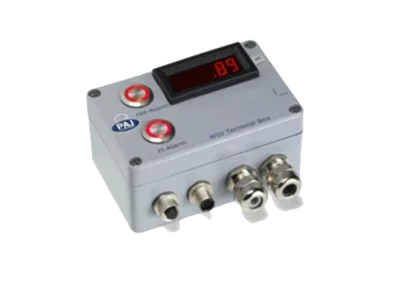
Paj TB A4
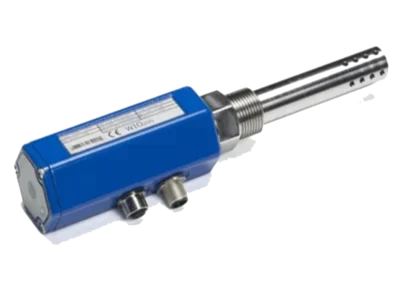
PAJ STANDARD SENSOR
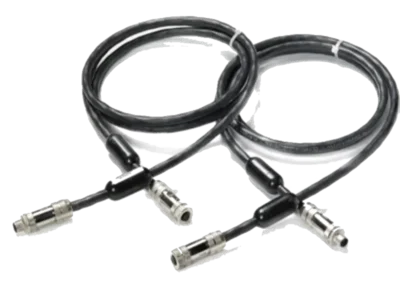
Paj Sensor Cable
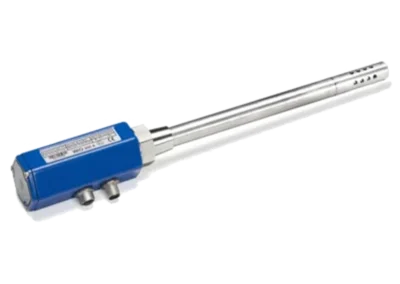
PAJ BALL VALVE SENSOR
Simple operation
Product range
With the WIO water in oil sensors an online monitoring of the oil condition is possible.
- The total amount of oil is measured (or bypass quantity)
- Around the clock measurement (24/7)
- Regardless of the team and their experience, the measurement is of high quality
- The WIO gives a timely alarm for limit violations
- The WIO can be easily integrated with the existing monitoring system
- Connection to automation systems through pot. free contacts or 4-20mA outputs, or other interfaces
- The crew can intervene immediately to avoid machine damage.
PAJ WIO sensor versions (WIO 200B to 500):
Below a small selection of our product range.
WIO200B standard version
- 24VDC ± 10% power supply
- 2 x NC relay outputs 60VAC / 1A
- 1 galvanically isolated analog output 4 – 20mA
- fixed alarm points HA-0.50 aW, HHA 0.90 aW
- manual test function
WIO300 ball valve version
- 24VDC ± 10% power supply
- 2 x NC relay outputs 60VAC / 1A
- 2 x galvanically isolated analog output 4 – 20mA
- RS232 Modbus user interface
- adjustable alarm points for HA and HHA (aW / PPM)
- manual test function
PAJ Terminal boxes (for connection with the WIO sensors):
- 24VDC ± 10% power supply
- 2 x NC relay outputs 250VAC / 2A
- 1 galvanically isolated analog output 4 – 20mA
- 4-digit display for aw / ppm
- LED indicator for H / HH alarm
- Push-button function for H / HH alarm
- Acoustic indication for H / HH alarm